Precision leak testing, pressure calibration, boiler gas manifold repairs, appliance hookups, and NYC Local Law 152 compliance guidance.
Call (315) 202-8009 for Gas ServicesIf you smell the distinctive rotten-egg odor of natural gas, hear hissing around gas piping, or suspect an active gas leak, IMMEDIATELY EVACUATE ALL OCCUPANTS FROM THE BUILDING. Do not operate any electrical light switches, do not touch electrical appliances, and do not use indoor telephones. Once you are at a safe distance outdoors, immediately call 911 or the National Grid Emergency Hotline at 718-643-4050. Never attempt DIY gas repairs or investigate gas leaks yourself.
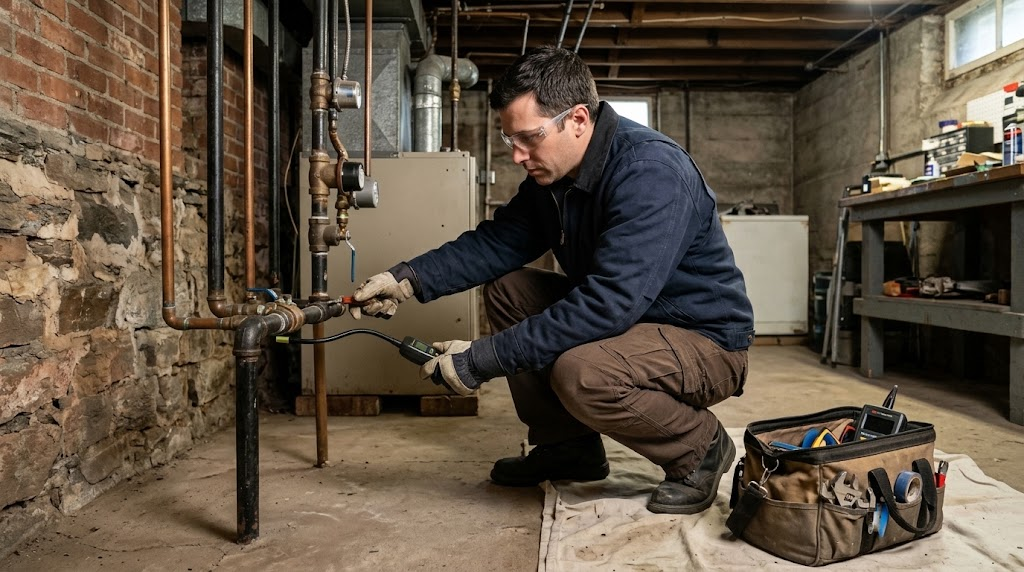
Natural gas powers the boilers, water heaters, and cooking appliances that keep Brooklyn Heights households running smoothly. Because natural gas is volatile and pressurized, executing a professional gas line repair Brooklyn Heights Brooklyn requires rigorous adherence to the New York City Fuel Gas Code. All gas work must be performed by or under the direct supervision of a licensed NYC Master Plumber.
Whether you need a proactive gas piping inspection Brooklyn Heights Brooklyn to address aging black iron lines in your cellar or require a new gas line installation for stove Brooklyn Heights Brooklyn during a kitchen renovation, we ensure every joint, fitting, and shut-off valve is leak-free and code-compliant.
We also handle gas valve replacements for central heating equipment, coordinating with National Grid when gas service lockouts occur to execute rapid pressure testing and restore fuel to your boiler.
Demystifying periodic gas piping inspection mandates for property owners and landlords in Brooklyn Heights.
Local Law 152 requires periodic inspection of exposed gas piping systems in all buildings classified under NYC building codes, once every four years based on community district schedules.
Single-family and two-family brownstones (R-3 residential occupancy) are generally exempt from the cyclical Local Law 152 mandate, though certified inspections remain essential following any piping modification or utility shut-off.
The inspection must be conducted by a licensed master plumber. An official GPS-1 report must be submitted to the NYC Department of Buildings within 60 days to avoid civil penalties.
A rigorous engineering protocol designed to guarantee complete fuel line integrity.
We trace all exposed gas runs, pipe unions, elbows, and boiler gas trains using sensitive digital combustible gas sniffers calibrated to detect parts-per-million methane concentrations.
Every suspect pipe fitting is tested with specialized liquid leak detection solution to visibly confirm the exact location of microscopic pressure leaks around threads.
For extensive repairs or service restorations, the gas line is isolated from appliances, pressurized with inert nitrogen gas to DOB-specified PSI levels, and monitored on calibrated mercury or digital test gauges.
Failing piping sections are cut out and replaced with heavy-duty Schedule 40 black steel pipe, using malleable iron fittings and approved anaerobic pipe sealant.
We install certified brass gas valves, reconnect appliances with approved stainless steel flexible connectors, purge trapped air, and verify steady flame combustion.
Gas line repair projects in Brooklyn Heights vary based on the age of the building and the location of the piping:
Safe gas piping connects directly to all central heating equipment:
Evacuate the premises immediately. Do not operate light switches, do not use phones indoors, and do not ring doorbells or operate appliances. Once safely outdoors and away from the building, call 911 or the National Grid emergency gas line immediately. Never attempt to locate a gas leak yourself.
NYC Local Law 152 mandates periodic inspections of exposed gas piping systems for most multi-family and commercial buildings at least once every four years. Single-family and two-family homes (classified as R-3 occupancy) are generally exempt from this cyclical requirement, but any gas work must still follow NYC Fuel Gas Code and involve licensed plumbers.
No. In New York City, all gas piping alterations, valve replacements, and appliance installations must be performed by or under the direct supervision of a licensed NYC Master Plumber and filed with the Department of Buildings (DOB). DIY gas work is illegal, invalidates insurance coverage, and poses severe life safety risks.
Certified technicians utilize calibrated combustible gas detector (CGD) 'sniffers' and non-corrosive bubbling leak detection solutions, followed by nitrogen pressure testing to verify that repaired lines hold pressure without dropping.
Speak with qualified professionals to ensure your gas piping meets stringent NYC safety codes.
Call (315) 202-8009 to Schedule Service